"Oro" is meant to help uplift bilingual youth who are suffering mental and emotional distress that affects their self-esteem and sense of belonging. When children experience trauma / Adverse Childhood Experiences, their learning and social emotional development are affected. As teachers, we can incorporate songs like "Oro" into our arts activities to offer at least a temporary relief from the painful reality that many of our students face on a daily basis. This song emphasizes the existence of multiple communities of people that do cherish their presence and are more than willing to support them. The use of both English and Spanish in the lyrics encourages cultural and linguistic pride in those whose first language is Spanish.
Suggested Music / SEL K-6 Lesson Plan incorporating "Oro"
Intro: Present the wonderful book I Am Golden By: Eva Chen, Illustrated by Sophie Diao. I personally introduce it as one of my favorite stories that reminds me of my own family even though the family in the story is from China and my family is from Mexico. Students are reminded to be respectful, especially if they have not had a chance to learn about Chinese culture except for what they've seen in cartoons, etc. This can be emphasized using one or more of the Southern Poverty Law Center's Social Justice Standards.
Read the story with your class. The read aloud below is excellent if you have access to a projector.
This story beautifully illustrates the experience of belonging to a family that immigrated to the US, dealing with a language barrier, racism and bullying, and ultimately embracing our "differences" as what make us unique and "golden" through a verbal affirmation. After reading the story you can ask students to share any connections with their own story and their own family.
Share the "Oro" lyric video with your class, and then display the lyrics to ask for help "translating" the lyrics in Spanish.
You are not alone We are here for you Siempre hay alguien Que puede ayudar No llores más
Somebody’s there Somebody cares Alguien está Alguien habrá
Somebody’s there Somebody cares Alguien está Alguien habrá
Eres oro Y vales mucho más You’re so loved You’re our hopes and our dreams You’re family
Somebody’s there Somebody cares Alguien está Alguien habrá
Somebody’s there Somebody cares Alguien está Alguien habrá
Using echoes, teach the song line by line either spoken rhythmically or sung a capella or using the video as a guide.
For TK-1st grade Distribute colorful scarves and instruct students to wave their scarf slowly and smoothly (legato) while they sing or listen to the song once more.
For 2nd-6th grades Go over the 6|8 meter + the definition of a downbeat / accented beats using a heart chart and body percussion such as pat pat pat, clap clap clap and ask them to try it while singing a portion of the song.
Review+ Reflection Question:
Music vocabulary: steady beat, melody, lyrics, body percussion
What makes you golden?
Did you try it with your class? Let us know how it went!
José Luis Orozco performed at my elementary school when I was in kindergarten and I can recall that it was a joyous experience. Now as an elementary school music teacher, I'm delighted to be able to share my favorite songs I learned from his recordings with my students. The following are songs that I have taught in music class with great success.
Al tambor
"Al tambor" was definitely one of my favorites as a child, and it's always a big hit with my elementary music students. I play it with a C to G7 on a guitar or ukulele.
I love pairing this song with the story Drum Dream Girl by Margarita Engle and pausing the video read aloud when they talk about bongos, congas and timbales to share videos of soloists on each instrument, and also when they show the drum dream girl's sister' all-female band to indentify each instrument. If possible, show students a map of Latin America and point out the locations of Panama, where "Al tambor" originated, and Cuba where the story takes place.
You can then ask for volunteers to "play a solo" while the class sings their name in the song's verse. Depending on your class size, you can have each student who plays a solo pick up a small percussion instrument to play during the chorus, *after* solo section.
Chocolate
"Chocolate" is a fun song for students because of the movements, delicious subject matter, and of course the accelerando at the end. I play it D to A7 on a guitar or ukulele.
Introduce the song by having students guess a delicious hot beverage. Once students guess hot chocolate, show a picture of this chocolate and ask if any of them have ever had this specific kind of hot chcolate. Explain that this kind is made using a molinillo, and demonstrate how it stirs using a rhythm stick. Ask the class to be your echo and say the words "chocolate chocolate" and "bate bate chocolate" in the melody's rhythm while holding an imaginary molinillo.
Ask if they know how to say chocolate in Spanish. It's the same word! Now ask if they know how to count to three in Spanish. Write 1, 2 , 3 below your four-beat heart chart.
Ask students to echo you as you count 1, 2, 3, clap. After a couple of repetitions, change the 1, 2, 3 to Spanish and repeat a couple of times.
Take a moment to ask if students know how to make this kind of chocolate. Explain that the solid chocolate needs to be broken up into pieces before it's put in the hot liquid. Now write the cho-co-la-te syllables above each heart on your chart. Depending on your students' reading level, you will provide more guidance and slow your pace down. Once they can follow you in the song's verse you can add the melody and have them echo or sing along with you.
Once students have learned the song, you can have them sing it using rhythm sticks. They will click instead of clap, and put one down to use the other as a molinillo during the chorus.
Los Elefantes
"Los elefantes" (which I play with C and G7 on a ukulele or guitar) incorporates counting in Spanish and can be used in a number of fun activities:
1. Having students walk an imaginary tightrope one by one, slowly to the steady beat. You can use the edge of a rug or painter's tape on the floor to indicate the line.
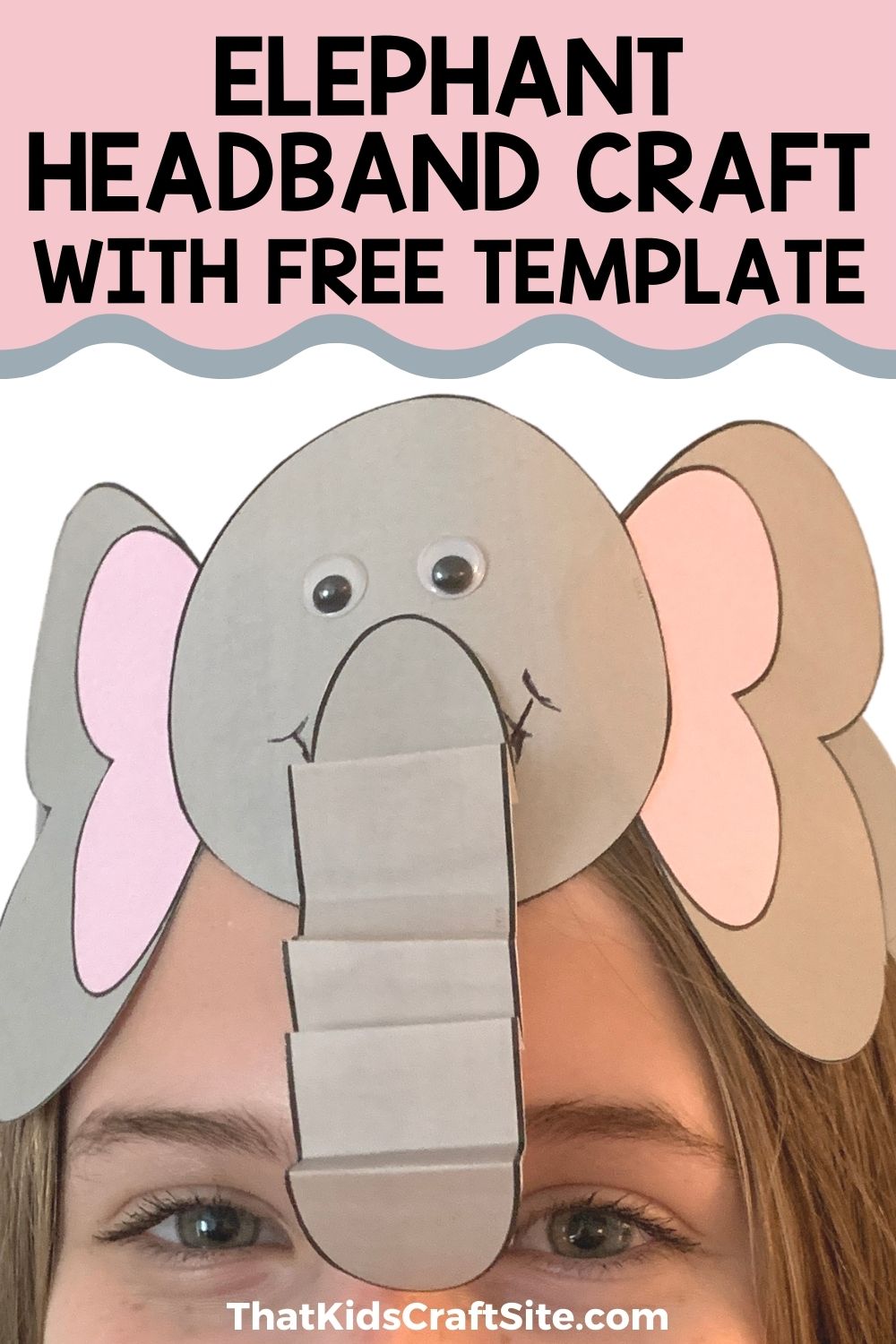
2. You can have students perform the song by assigning a group to play each the elephants as they are introduced in the song. You can add an extra layer of fun by incorporating a craft activity where students make their own elephant headbands like this one:
3. You can sing the song while adding plush elephants to a parachute outside. I collected mine from thrift stores and they are all different shapes and sizes. Make sure you go over safety / behavior expectations before beginning the activity.
De colores
I love "De colores" so much that I recently released my own recording of it! My previous post includes a variety of lessons related to this song along with the materials I created to accompany my version.
There is a dire need for culturally responsive materials for elementary music education. Ms. Cosquilla is an award-winning songwriter who has a Certificate of Achievement in music with Mariachi Specialization from Southwestern College, a BA in Latin American Studies from Harvard University, is currently pursuing a Master's Degree in Music - Music Education, and 19 years experience in music education that includes curriculum writing and arts integration with a focus on Social Emotional Learning. She currently teaches general music in Los Angeles and works closely with Chicx Rockerxs South East Los Angeles and the Mariachi Women’s Foundation.